
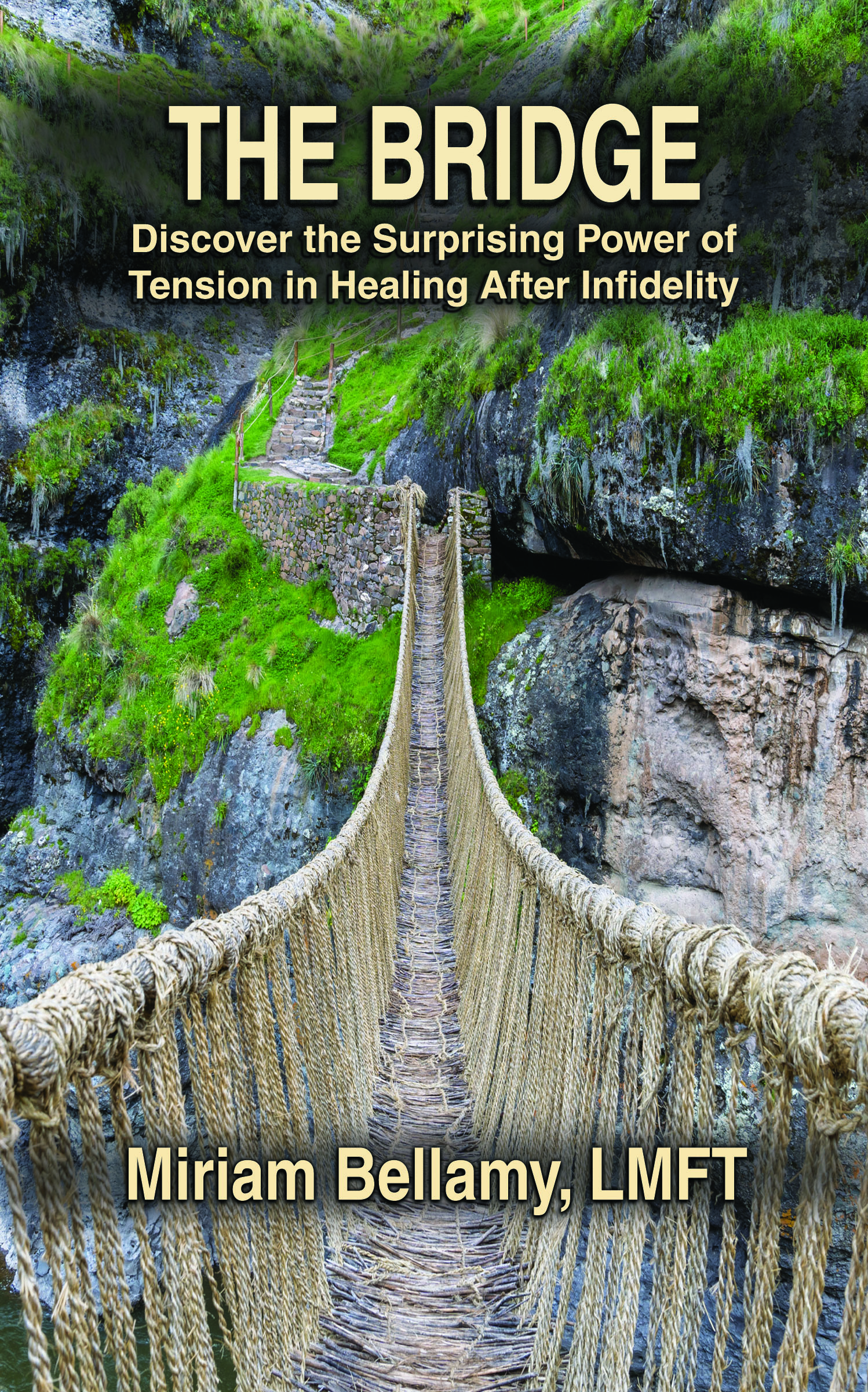
A new book by Miriam Bellamy, LMFT
The Bridge
Discover the Surprising Power of Tension in Healing After Infidelity
Infidelity shatters trust, and the frantic rush to repair it often makes things worse. Drawing on nearly three decades as a couples therapist, Miriam offers a different path: pause, steady yourself, and rebuild from solid ground.
Paperback & ebook · BookLocker sells both direct from the publisher
“I cannot recommend The Bridge highly enough. Most books about infidelity focus on rebuilding trust in your partner; Miriam does something far more enduring — she helps you rediscover faith in yourself.”Hal Runkel · New York Times bestselling author of ScreamFree Marriage
Why Rebuilding Trust Right After an Affair Doesn’t Work
Why Pausing First is More Effective
An Unconventional Approach to Healing and Hope
Excerpt from The Bridge: Discover the Surprising Power of Tension in Healing After Infidelity
“There are far, far better things ahead, than any we leave behind.” C.S. Lewis
As we dive into this together, I’d like you to consider something radical, not reckless, not hopeless—but brave, counterintuitive, and unlike anything you’ve likely heard from a marriage counselor before. I’m asking you to stop trying to save your marriage. Yes, you read that right. Stop. That might sound insensitive, misguided, or even dangerous. I know even reading those words may feel like someone just knocked the breath out of you. That’s how deeply we all need to feel the hope of repair. So you might be wondering what kind of professional would tell you to lay down the very thing you’ve been fighting for—the very thing you’ve been clinging to, the lifeline that sometimes feels like the only way you can keep going. It’s exactly because this feels so tender that I want you to keep reading. Because when you stop trying to save the marriage, the real work begins.
It’s possible that at this moment, you would give just about anything to save your marriage. It is also possible that later tonight or tomorrow, when things aren’t going so well, you might wonder about ending the marriage. Both of those are normal attempts to end the pain you are in, the pain that is constantly triggered and seems to hit you out of nowhere and can knock you to your knees.
A client told me once that for months after her husband’s affair, she felt like she’d been in a car wreck, one that left her still dangling upside down and spinning with no end in sight. When I met her, she was just stepping out, looking around dazed, trying to get her bearings. Her analogy made total sense. After infidelity, it can feel as though everything is broken beyond recognition.
That’s what infidelity does. It knocks the bridge between you down. That bridge includes your history, the affection you have for each other, your memories, your trips, your music, your intimate connections—not to mention your families, your finances, and your kids if you have them. It’s down, but it’s not out altogether, which is actually part of the agony. There are still cables running across the canyon connecting you, and you are wondering what the hell they even mean anymore. Some of those cables are stronger and more powerful than others, but no matter how important or long-standing those individual cables may be, nothing is the same. The bridge has been broken. And trying to continue to cross it—to try to force things to stick together—keeps couples free-falling into new depths of pain.
A new bridge is required.
In fact, in my experience with couples in your situation, trying to repair that broken bridge of a marriage with too much vigor at the start often becomes the very thing that prevents either partner from moving forward. Why? Because your approaches are usually diametrically opposed.
One of you may want desperately to move on—to look ahead to the future, to focus on possibility, and to avoid the agony you see in your partner’s eyes. Perhaps too you want to avoid your own.
Or you may be the one who feels compelled to dive headfirst into the abyss—to discover every detail, every thought, every feeling, every hidden activity. You may want to unearth every darkness in the hope of finding the light, to get back to trust. But more often than not, the way you are going about it takes you further away from yourself—even though that’s the very thing you swore you would never do again.
One of you says: Don’t go into all that pain. Neither of us will survive it.
The other says: The only way back to us is to dive into the pain. I must know everything—or we won’t survive it.
This conflict keeps you circling each other in an agonizing tug-of-war, making the existing knots even tighter instead of healing and growing. Often, one or both of you capitulates just to reach a fragile peace—dropping your own needs, biting your tongue, pretending you’re fine just to stop the fighting. To stop the pain. But capitulation is no way to build a trusting alliance. The approach is emotionally exhausting for both of you, and not building what needs to be built.
No, the work of building a trusting alliance requires something else. Something new. Something deeper. Truer. And more grounded. You may feel you can’t possibly do more than you are doing right now. Let me reassure you, this work isn’t about doing more. It’s about doing differently. And that’s what The Bridge is all about. Doing it differently.
And it starts with stopping.
Free chapter
Keep reading — Chapter One is yours.
If something here felt familiar, the first chapter goes further: why the urge to fix things right away so often backfires, and what to do instead.
Your email stays private. Occasional notes from Miriam; unsubscribe anytime.
From readers
What readers are saying
Many say it speaks to any broken trust — not only infidelity.
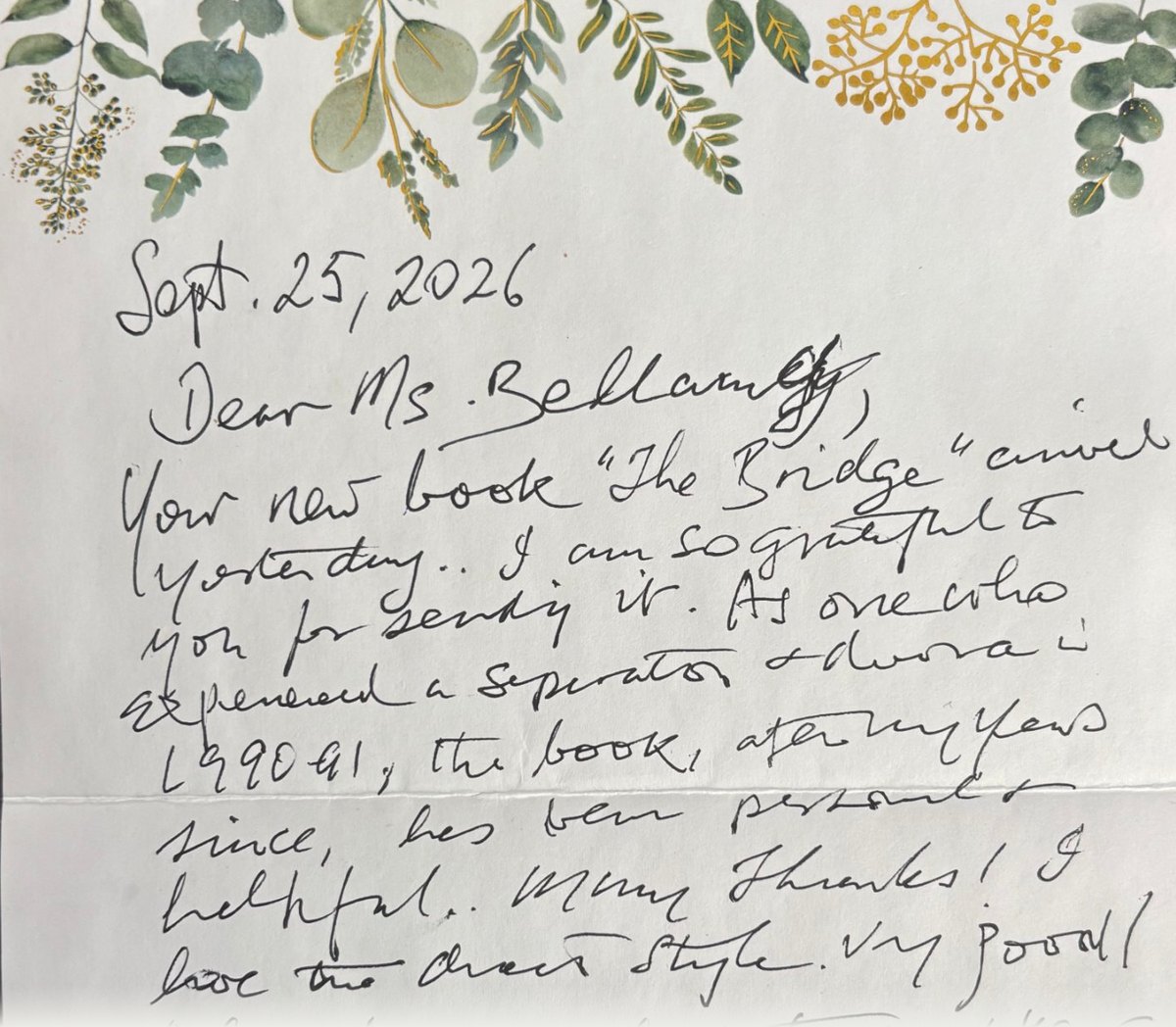
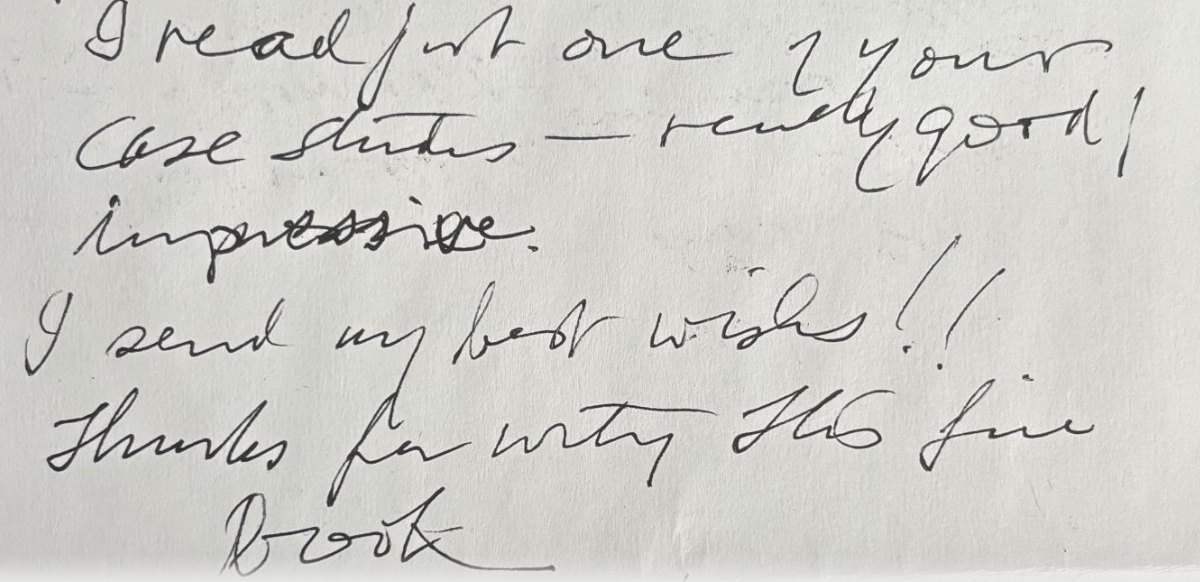
A letter to Miriam
“As one who experienced a separation & divorce in 1990–91, the book, after many years since, has been personal & helpful. Many thanks! I love the direct style. Very good!”
“I read just one of your case studies — really good! … Thanks for writing this fine book.”
— J.H.
“By the end, I was thinking less about the people who had broken my trust and more about myself — and how much I trust myself now.”
“The Bridge is different than any book I have read on this topic… it doesn’t reduce healing after betrayal to a simple formula or predetermined outcome.”
“I loved that I could genuinely feel her open mindedness making everyone feel heard and not judged.”
“There’s not a bad person or good person, everyone is hurting, and this explores how to move forward.”
Inside the book
What you’ll discover in The Bridge
Whether you were betrayed or you’re the one who strayed, this book offers a steadier way through.
- Why rushing to save your marriage can make things worse — and the surprising strength of pausing first
- How to stop fighting your feelings and let heart and mind work together, so emotions bring clarity instead of chaos
- How to trust yourself again — and why honoring your limits and saying no is the only path to a real yes
- The bigger pattern pulling you both under — and how your own independence makes a healthier connection possible
- How to stay on your side of the canyon, doing your own work instead of trying to fix or manage your partner
- Why real trust is built through honesty that costs you something — and why safety comes from taking measured risks
- How to stop asking your marriage to carry everything by anchoring to family, friends, and community
- How to approach intimacy after betrayal with depth and patience instead of urgency
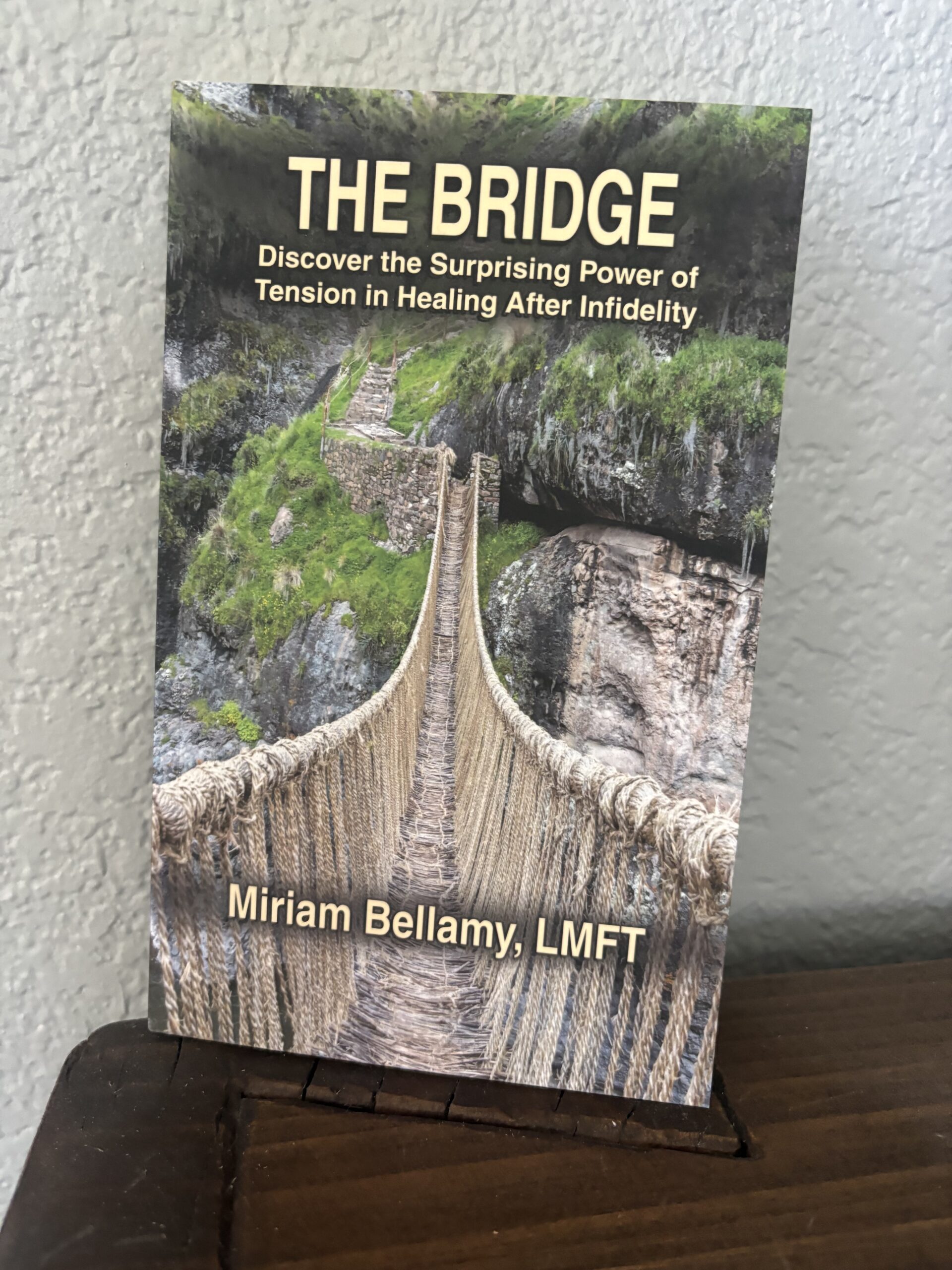
Available now
Order your copy
Ebook (PDF, ePub & Kindle) and paperback direct from BookLocker
Beyond the book
Go deeper with Miriam
Listen: Bridgecraft
Episode One — “The First Step After Infidelity Isn’t Saving Your Marriage.”
Affair Recovery Groups
You don’t have to do this alone. Steady, guided support alongside others walking the same road.
Learn about groupsCouples Intensive
Focused, concentrated work for couples ready to go further than weekly sessions allow.
Explore the intensivePrefer one-on-one? Infidelity counseling in Golden, Thornton, Marietta & online →
